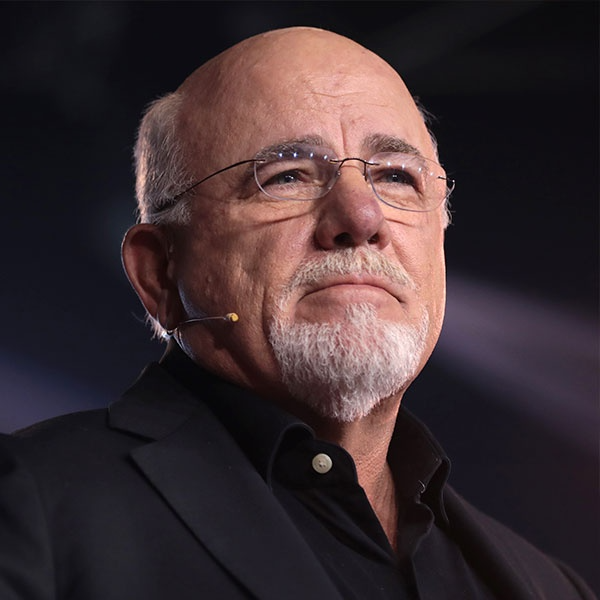
Dave Ramsey
Ramsey Solutions
The Founders' Story: How did you meet your co-founders, and how did the decision to build a company together evolve from an idea into action? Unlike many tech startups born from a partnership, Ramsey Solutions was born from a personal crusade. Dave Ramsey didn't start with a co-founder in a garage; he started with a mission in his living room. After experiencing a devastating financial collapse, he rebuilt his life alongside his wife, Sharon. The decision to build the company wasn't an immediate business plan—it evolved from his desire to share the biblical principles of money management that saved him. It began as a one-man show that slowly transformed into a structured organization as the demand for his advice outgrew his personal capacity. Elevator Pitch: If you had to explain the essence of the company and the value it delivers in just one paragraph, what would you say? Ramsey Solutions exists to solve the agonizing pain of financial stress. We offer straightforward, actionable financial guidance through best-selling books, courses, and a massive media network. We don’t just teach math; we empower millions to claw their way out of debt, build wealth, and achieve true financial peace, turning chaos into stability. Background: Which of your past experiences were the most decisive foundations for your success leading the company? Ironically, my greatest qualification wasn't my early success, but my massive failure. By age 26, I had a real estate portfolio worth $4 million. I had the "Midas touch." But by 28, I had lost everything due to mismanaging debt and was forced to declare bankruptcy. That experience of hitting rock bottom gave me a PhD in what not to do. It stripped away the arrogance and replaced it with empathy and a relentless drive to find a better way. Roles: How has your role evolved from the "do-it-all" phase to managing the current scale? In the beginning, it was pure hustle. I was working 16-hour days, setting up overhead projectors in hotel conference rooms, teaching the classes, and handling the logistics. It was labor-intensive and exhausting. Today, my role has shifted from being the sole operator to leading a media empire. I’ve moved from doing everything to empowering a team of "Ramsey Personalities" and executives who carry the torch, allowing the message to scale far beyond what I could physically do alone. The Insight: What was the latent market pain or "eureka moment" that made you think: "I need to build a company to solve this"? The "eureka moment" was born out of desperation. After my bankruptcy, I saw that the "normal" way of handling money—leveraging debt to buy things you can't afford—was broken. I realized that millions of people were drowning in the same anxiety I had felt. I turned to biblical principles for answers, and when I started applying them, my life turned around. I knew I had to share this path out of the darkness. The "Before": How did the market survive without your company? Before Ramsey Solutions, the market "survived" on bad advice and predatory lending. People treated debt as a necessary tool for life, using one credit card to pay off another, living in a constant cycle of stress. There was no clear, step-by-step roadmap for the average person to get out of the hole; there were only complex financial products designed to keep them there. How did this problem manifest, or what "workarounds" did customers use before your solution existed? Customers were using temporary patches—consolidating loans or ignoring the problem until it exploded. I saw people in my local church struggling, asking for help with their financial troubles because they knew I had been through the wringer. They didn't need a bank; they needed a guide. Resilience: What motivated you to stay committed to the original vision, even during the initial periods of uncertainty? It was the mission. When you’ve felt the shame of bankruptcy, helping someone else avoid it becomes a calling, not just a job. Facing public skepticism and refining methods that were both practical and spiritually grounded was tough, but seeing real families change their family trees kept me going. The MVP: What did the first version of the product look like at launch? What was essential in it to get started? Our MVP was gritty. It wasn't a sleek app; it was me, a stack of physical workbooks, and an overhead projector in a local hotel. This was the prototype of Financial Peace University . The essential component wasn't technology—it was the content and the raw, honest delivery. Differentiation: What was fundamental for your solution to be perceived as superior to the status quo right from the start? Authenticity. I wasn't a banker in a suit trying to sell a product; I was a guy who had lost it all and found a way back. That transparency built trust. We combined common-sense math with behavior modification psychology, which was completely different from the dry, numbers-only approach of the status quo. The Turning Point: What adjustments to the product or customer understanding were decisive for you to feel that you had reached Product-Market Fit? The feedback loop was immediate. We started counseling one-on-one, then moved to small classes. As I watched people actually pay off debt and save marriages based on this advice, I knew we had something. The transition from random advice to a structured, 26-week course (which later became video-based) was the moment the product became scalable and repeatable. Early Adopters: Who were the first relevant customers to bet on you, and why did they trust such a young company? It started in my local church community. One man asked for help, which led to a small class of 37 people. Within a few years, that grew to over 350 students. They trusted me because I was one of them, and the results were visible. Proof of Life: What was the specific data point, feedback, or event that served as definitive proof to you that the business model worked? The definitive proof was the organic explosion of word-of-mouth. We didn't have a marketing budget; we had results. When people started getting out of debt, they told everyone they knew. That referral engine confirmed that the model worked. Market Size: At what moment did you realize the addressable market was bigger (or more complex) than initially planned? When we moved from the church classrooms to the airwaves. I co-hosted a show called "The Money Game" on a bankrupt radio station. Even with a small signal, the phone lines lit up. I realized this wasn't just a local church issue; it was a national crisis. Initial Channels: Which acquisition channels gained the most traction in the first few months of the company's life? Local community outreach and the radio show. The radio show, even while generating zero revenue initially, was the ultimate top-of-funnel strategy. It allowed me to demonstrate expertise to a broad audience, who then converted into counseling clients or class attendees. Expectation vs. Reality: What did you discover about selling to your customer that completely contradicted your initial thesis? I learned that you can't just give people math; you have to give them hope. Also, building a media presence is a long game. "The Dave Ramsey Show" didn't turn a profit for its first 10 years. Most people would have quit. But that platform was building the trust required to sell everything else. Acceleration: Which distribution or marketing decisions were most responsible for accelerating growth? Syndication and books. Taking the radio show national expanded our reach from thousands to millions (now 20 million weekly listeners). Simultaneously, publishing best-selling books acted as massive lead magnets. People would buy a $20 book, get hooked on the philosophy, and then sign up for the $99 course or attend a live event. Scaling Strategy: Once past the survival phase, what were the most important strategies to aggressively scale the business? We had to move beyond "Dave." We developed the "Ramsey Personalities"—other experts in careers, leadership, and youth—to diversify our content. Additionally, transitioning Financial Peace University from live lectures to video allowed us to run thousands of classes simultaneously across the country without me being in the room. Bold Bets: Was there any growth bet (a new market, a risky campaign) that positively surprised you? Live events. We bet that people would pay to sit in an arena and hear about money. It worked. From intimate coaching sessions to major summits with thousands of attendees, events became a huge revenue driver and community builder. Success Metrics: Which initiatives had the biggest direct impact on revenue or retention metrics? Email marketing has been a silent killer for us. By using detailed segmentation, we keep our audience engaged with the right content at the right time—whether they are just starting to budget or are ready to invest. This keeps the ecosystem sticky. Initial Logic: How did you define the price at the very beginning? Was it a guess, cost-based, or value-based? It was a mix of value-based and accessibility. We needed to be affordable enough for people in debt but expensive enough to ensure they had "skin in the game." Course Corrections: Was there any change in the pricing model that was a game-changer for the company? We diversified. We now offer entry points for everyone: free content (radio/podcasts), low-cost tools (Ramsey Vault at $4.99/mo, books), mid-tier subscriptions (EveryDollar at $12.99/mo), and premium products (Financial Peace University at $99 and Live Events up to $699). This ladder allows us to serve customers at every stage of their financial journey. Learnings: What have you learned over time about the customer's willingness to pay for your value? People will pay for peace of mind. When you solve a problem that keeps people awake at night, price resistance drops. Mistakes & Wins: Looking back, what was the toughest strategic lesson you had to learn the hard way? Risk management is everything. My bankruptcy taught me that leverage is dangerous. Even if you are successful, excessive risk can wipe you out overnight. If Started Today: What would you do differently if you were starting the company from scratch today, with the knowledge you have now? I would double down on transparency and culture even earlier. Regular communication with the team and building a culture of trust has been vital. Also, I would have embraced the diversification of products sooner to insulate the business from market shifts. Belief Shifts: Is there any "absolute truth" you believed in at the beginning that changed completely along your journey? The belief that "debt is a tool." I used to believe that. Now, the absolute truth of my life and business is the opposite: the most effective way to build a sustainable empire is to do it debt-free. Running a business without the shackles of payments provides a stability and freedom that leverage can never offer.